
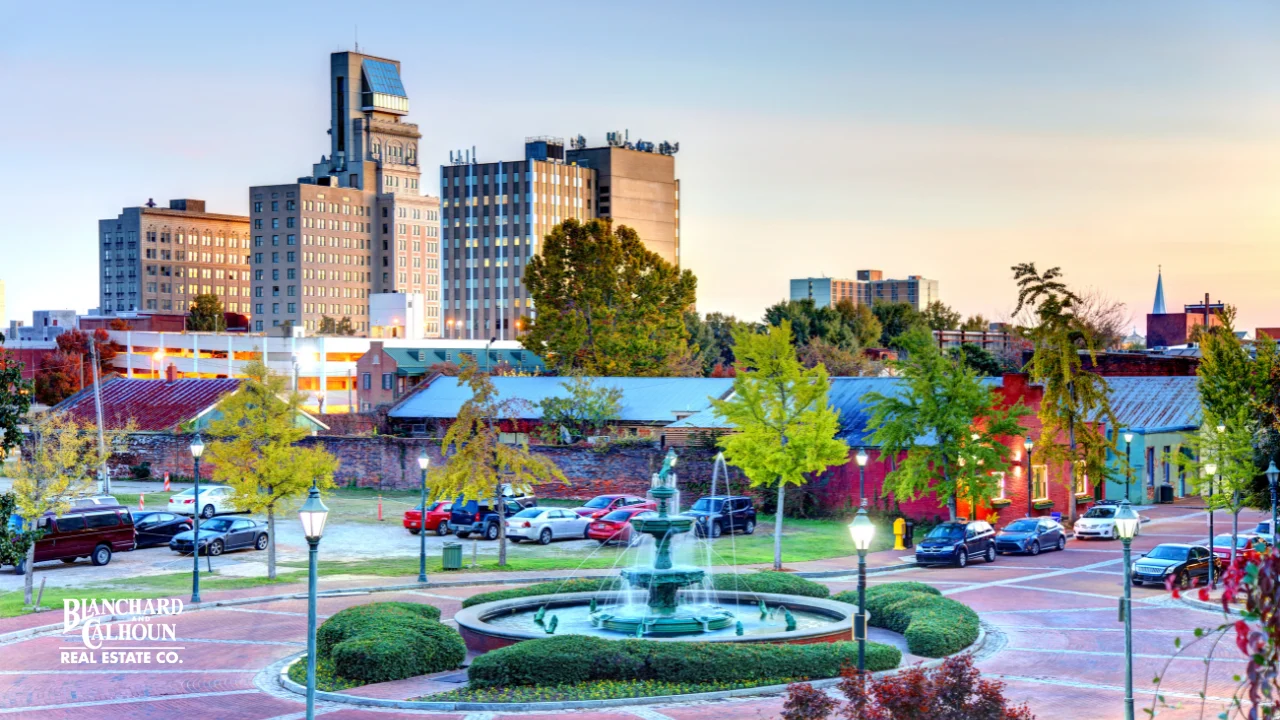
This section is for a planner who already chose the core and now has to manage circulation inside it. Downtown Augusta is about transfer points: lobby to ballroom, garage to venue, riverfront to reception, convention block to dinner room.
That is why the copy has to sound like movement and timing. The broader Augusta section is about which zone to choose. Downtown is about making one dense zone behave.
Execution priorities
- Write the schedule around transfers, releases, and choke points.
- Assume walking distance still needs timing discipline.
- Treat garages, elevators, hotel lobbies, and the riverfront as operating variables.
- Plan Downtown Augusta block by block, not citywide.
Downtown Augusta — what the area looks like for events
The augusta is part of the Augusta event market. Shows and meetings book here alongside the larger Augusta calendar.
Downtown Augusta sits in the Core market area.
Production for the augusta shows starts with the same brief we run for the rest of Augusta: venue specifics, show dates, footprint, outcome. Freight paths and local vendor availability are the variables that shift from the city core.
What Downtown Augusta actually looks like inside Augusta
Downtown Augusta is the compressed handoff district. That is the planning frame for Downtown Augusta.
The rest of the Augusta market behaves differently, so the brief for the augusta starts with the district's own movement instead of borrowing assumptions from downtown or the convention zone.
Augusta convention venues and meeting properties
USCA Convocation Center.
Newberry Hall is one of the anchors. Banquet seating for 220 to 250 and hors d'oeuvre reception capacity for 325.
Edgar's Above Broad: the main venue site places the property at 699 Broad Street and reinforces the mission-driven Edgar's Hospitality Group operating model.
Augusta labor and venue services
There is no single labor model for Augusta trade shows.
Columbia County Exhibition Center: the county's current sales material emphasizes rentable exhibition space, breakout rooms, concessions, and facility contact paths.
What's included in the project scope
Projects in the augusta typically include design work, fabrication or rental sourcing, graphics production, show-service paperwork, freight, install, show-hours coverage, and strike.
Individual projects layer or remove items based on scope.
Scope boundary is as important as scope inclusion.
The process from start to finish
After the brief, the work turns to the building itself.
With venue details locked, production runs.
One named show-site lead runs the install.
Throughout show hours, the on-site lead stays present.
What drives cost and timing in Downtown Augusta
Working in the augusta affects budget through travel time, available labor depth, and the venues that are realistically usable inside the district. Smaller districts trade flexibility for atmosphere.
Lead time is formed by the district's rhythm; programs that ignore the augusta's actual pace pay a premium to recover later in the calendar.
Outcomes we optimize for
Exhibitors who measure programs seriously track leads, floor-booked meetings, and post-show pipeline. The build and the install are upstream inputs to those KPIs.
The post-show debrief is where the numbers get connected back to the physical booth. Which demo station drew traffic, which meeting area closed more conversations, which graphic zone attracted dwell time — that feedback shapes the next build rather than getting lost.
Working Downtown Augusta the right way
The augusta is the compressed handoff district. That is the operating reality the right operator already understands when planning starts.
On a real job, that shows up in how the augusta is staffed, sequenced, and timed; the program lands the way the district can actually support, not the way a generic citywide playbook assumed.
Downtown Augusta questions
Do you work at DoubleTree by Hilton Hotel Augusta?
Yes.
How does crew availability work in Downtown Augusta?
In the augusta, crew planning has to track the district's pace and the venues actually operating inside it. Local labor depth is part of why the area gets chosen, not an afterthought.
How early should planning for this work begin?
Early enough to choose venue, hospitality, and timing inside the district instead of accepting whatever is left. In the augusta, the right operating posture only stays achievable with real lead time.
What is needed to start planning in the program?
The audience, the program purpose, and a candidate venue or shortlist inside the augusta. That is enough to test whether the district is the right call before money moves.
Who runs the program on-site in this service?
A named field lead with the schedule, the floor plan, and the local context for the augusta. That role keeps the day from collapsing into a series of separate ad-hoc calls.
Does a program built for the plan translate to other markets?
Partially. The place-specific parts of the augusta have to be re-thought somewhere else; the general planning disciplines usually carry over fine.
What happens if a vendor or venue issue lands mid-show in this work?
The field lead handles it locally. Most fixes are inside the district; bigger issues get routed to the right vendor without flooding the team back at base.