
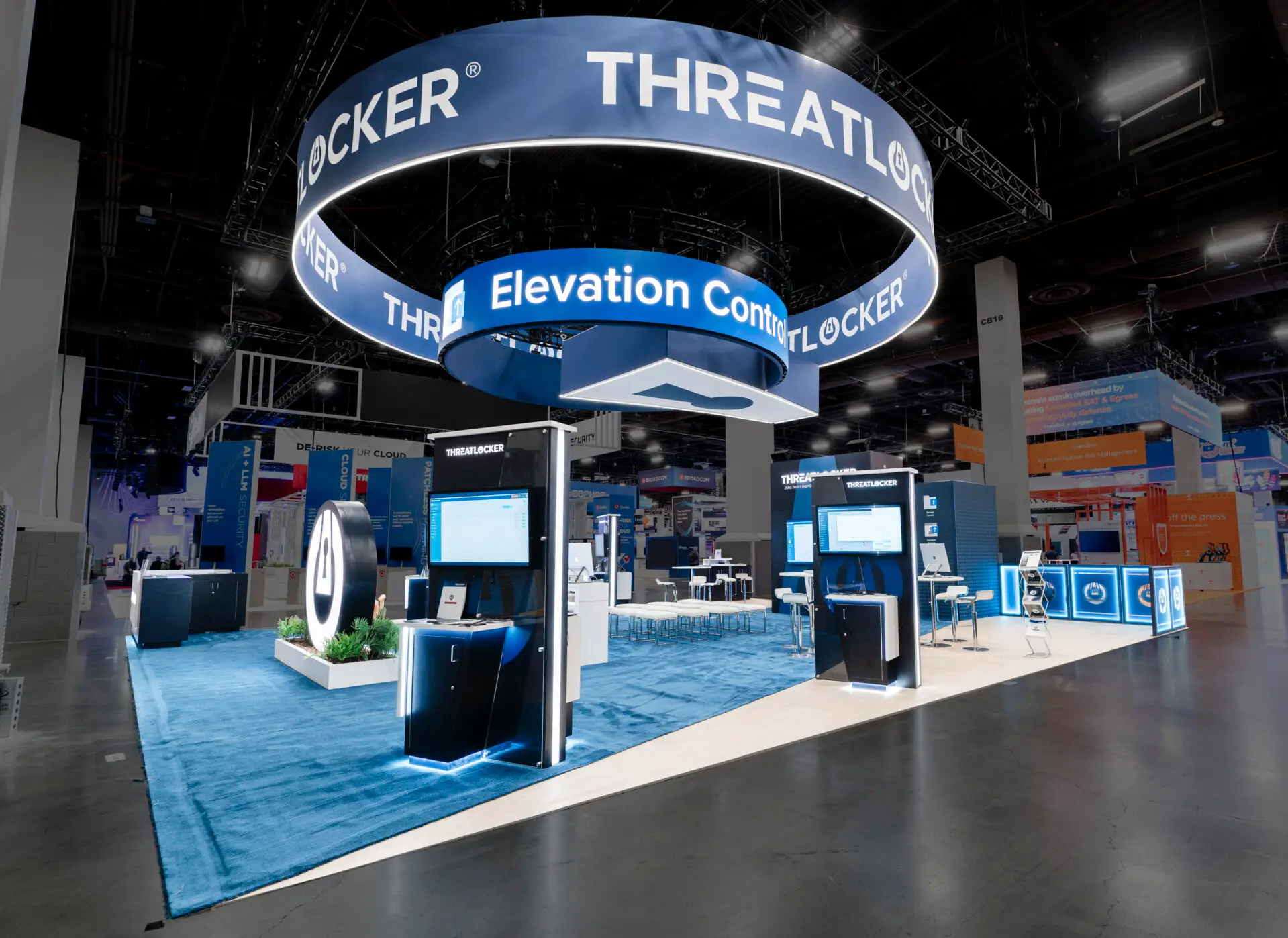
This service matters when the client is not relying entirely on the official show contractor for build and field work. The useful job is to map responsibility, keep forms clean, track insurance, confirm labor permissions, and make sure the EAC can operate inside the organizer's rules without colliding with venue-side services.
That makes the section about operational boundaries, show-manual compliance, and working relationships. It is not a warehouse-release section.
Execution priorities
- Clarify what the EAC owns versus what venue or show services still own.
- Keep exhibitor-manual forms, access rules, insurance, and labor permissions visible early.
- Treat organizer rules as live constraints, not background paperwork.
- Use coordination to prevent field-level scope collisions.
Where Exhibitor-Appointed Contractor Coordination sits in an Augusta program
Exhibitor-Appointed Contractor Coordination in Augusta is about keeping the client's outside show partner aligned with organizer rules, union labor conditions, venue services, insurance requirements, and all the work that still surrounds the booth once the EAC is in play. On an Augusta job that is the layer the buyer is paying for when the coordination is in the line item list.
The rest of the program inherits the discipline this scope brings, so it has to be defined precisely instead of bundled into a vague catch-all.
Augusta convention venues and meeting properties
Every Augusta show takes place in a specific building with its own rules. The venues below come up most often on our production calendar.
Edgar's Above Broad is one of the anchors. The main venue site places the property at 699 Broad Street and reinforces the mission-driven Edgar's Hospitality Group operating model.
Augusta Convention Center: vista Convention Services as the official service contractor and Encore for audiovisual, internet, phone, and rigging support at the Augusta Marriott and convention center complex.
Augusta Marriott at the Convention Center. 14 event rooms, 81,102 square feet of total event space, 26 breakout rooms, and largest-space capacity for 3,895 guests.
Augusta labor and venue services
There is no single labor model for Augusta trade shows. The right approach depends on the specific venue and the show organizer's contracts.
On most Augusta shows, the labor plan takes one call with the venue's exhibitor services desk, one review of the current manual, and one email to the general contractor. Skipping any of those three is usually where problems start.
TechNet Augusta at Augusta Marriott / Convention Center: Vista Convention Services as the official service contractor and Encore for AV, internet, phone, and rigging, which reinforces that major Augusta expo work often flows through designated show contractors.
Use exhibitor-appointed-contractor coordination language for Augusta Convention Center and other formal expo environments. Use venue-managed hospitality language for hotels, museums, stadiums, rooftop venues, and golf-week hospitality properties.
Augusta neighborhoods and event districts
South Augusta and Regional Access Belt covers South Augusta, Hephzibah, Blythe, Fort Eisenhower. This cluster matters for airport access, military and defense traffic, and south-side routing into the broader CSRA.
Downtown Augusta Riverfront Convention District — Augusta, Downtown Augusta, Riverfront Augusta — is a different environment. This is the market's strongest convention and civic-events cluster, combining the convention center, downtown hotels, museums, theaters, rooftop venues, and the riverfront.
What's included in the project scope
A full engagement covers scope development, fabrication or rental, graphics, show services, logistics, and on-site execution from move-in through dismantle.
What shows up in most budgets: structure, graphics, AV, show-service orders through the venue, labor, freight, supervision days, and closeout. Individual projects layer or remove items based on scope.
Good execution comes from keeping the team small and the handoffs short. Every extra vendor in the chain adds a communication layer and a place where details get lost.
Multi-show programs add asset management: storage, refurbishment, graphic swaps, and scheduled re-kitting so the booth rolls cleanly from Augusta to the next city on the calendar.
Scope boundary is as important as scope inclusion. Show organizer fees, client-side staff costs, and any tools the client already owns are handled outside the engagement. Defining that boundary up front prevents billing surprises later.
The process from start to finish
Every project starts with a scope conversation: the show, the venue, the booth number, the dates, and the budget frame. Ten minutes of specifics produces a better plan than a week of generalities.
Once scope is clear, the venue work begins. Exhibitor manual, dock times, utility order IDs, rigging submissions for hanging elements, and labor calls all get locked against the venue's actual rules.
Production brings the plan into physical form: fabrication, graphics, AV, rentals, and the named lead who will run the floor.
One named show-site lead runs the install. Not a rotating crew and not a remote account manager — one person holds the floor plan, the punch list, and the labor calls from crates to doors.
Show-hours coverage is part of every engagement — not a premium add-on. On-floor support keeps the booth running while the client team runs the pipeline.
Closeout is tight: strike, crate, manifest, storage designation, and a written post-show report delivered within a day. That document drives the next booking.
What changes the cost of exhibitor-appointed contractor coordination
The price on the coordination moves with scope, accountability, and how much paperwork the engagement actually owns versus pushes back to the client. The number is designed around how much gets centralized.
Lead time depends on whether the program brief is real on day one or has to be reconstructed after kickoff; earlier alignment compresses everything downstream.
What success looks like on exhibitor-appointed contractor coordination
This service is measured on whether the engagement stays organized: clean paperwork, tracked vendor commitments, resolved approvals, and a closeout that does not surprise the client.
The clearest signal is when the original scope still describes the engagement at the end; that is what separates a managed engagement from a billed one.
What strong exhibitor-appointed contractor coordination look like
Done well, the coordination stop reading like a checkbox and start reading like one accountable layer of the engagement. The coordination in Augusta is about keeping the client's outside show partner aligned with organizer rules, union labor conditions, venue services, insurance requirements, and all the work that still surrounds the booth once the EAC is in play.
The signal that the work is on track is simple: nobody on the program is asking twice whose responsibility a given item is, and the closeout audit lines up with the original scope.
EAC coordination questions
Do you work at Enterprise Mill Events Center?
Yes. The main event center can host up to 250 people and that the courtyard can be tented to accommodate 500 or more.
How does this service interact with on-site labor?
The coordination sits above the labor lane.
What lead time does exhibitor-appointed contractor coordination need?
This scope is most useful when it is in place at kickoff, not after the program is already ordered. Earlier alignment keeps the engagement organized instead of reconstructed in week six.
What information does this work need to start?
The show or event details, the existing scope, current vendor list, and where the gaps are. The responsibility map is the first decision the engagement has to lock.
Who runs the program on-site when the program is in scope?
The accountable operator under this scope, supported by the field crew and the venue's contacts. That structure is what makes the engagement hold in real time rather than fragment under pressure.
Does this service carry into the next city on the calendar?
It can.
What happens if a paperwork or vendor problem hits during show hours?
That is the whole point of the coordination sitting as one accountable layer.