
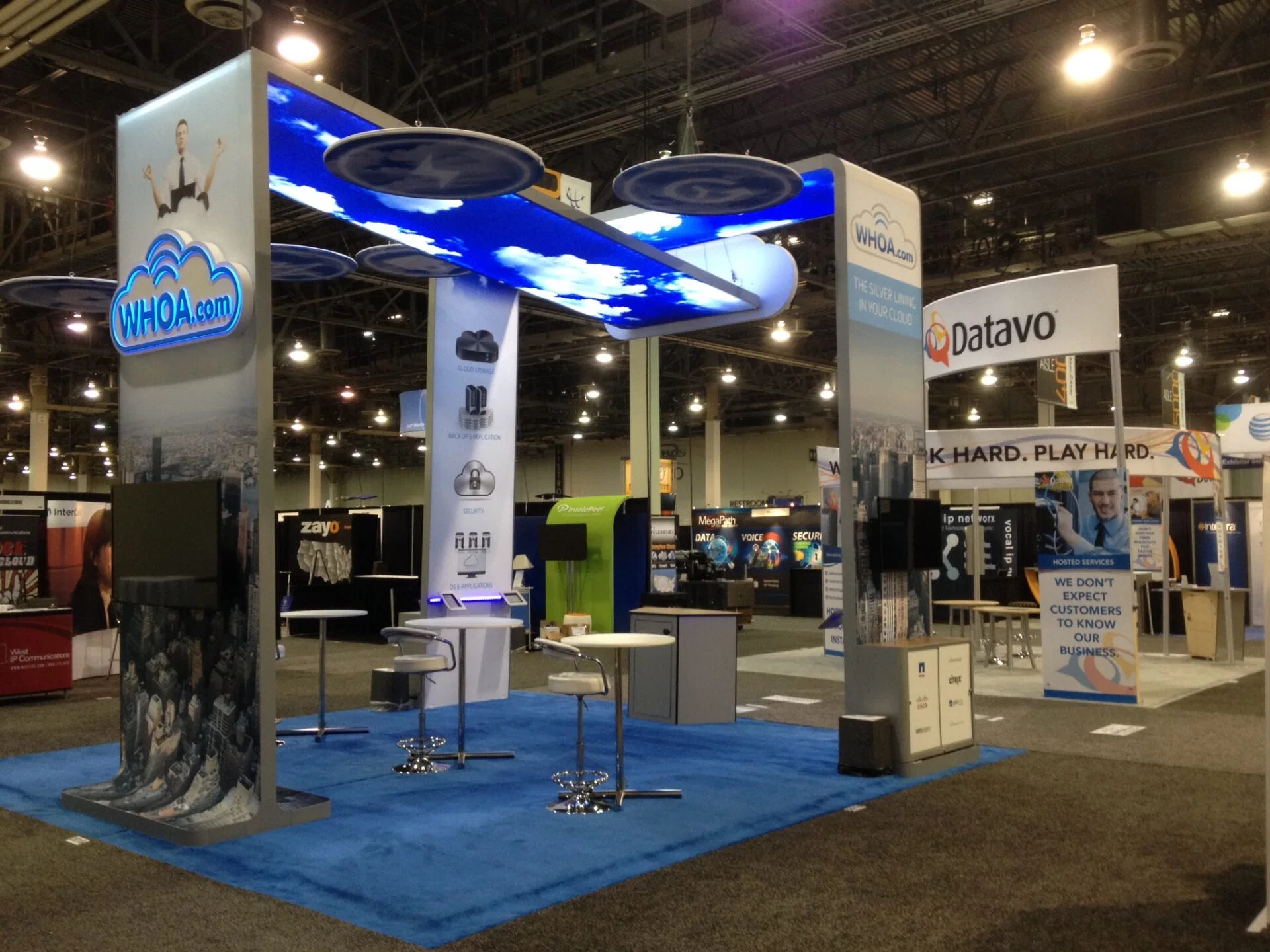
General contracting matters when the project needs one organizing layer across labor, rentals, service orders, floor support, timeline control, vendor scopes, billing exposure, COIs, and the many parties that touch the room. The value is not simply being present on-site. It is creating one contractual and operational center of gravity for the job.
That makes it different from show-site supervision. Supervision is the live field role; general contracting is the broader framework that defines how the full delivery package is assembled, bought, insured, and controlled.
Execution priorities
- Centralize scope, vendors, service relationships, and buyout early.
- Use one accountable package to reduce handoff confusion.
- Tie labor, rentals, service orders, and venue-facing items into one plan.
- Treat contracting as the project’s structural backbone.
What drives the schedule on trade show general contracting
The schedule on trade show general contracting is driven by approvals, paperwork deadlines, and the cadence the engagement is supposed to enforce on the rest of the program.
Once the responsibility map is real, the calendar becomes legible; until then, every milestone is one missed signature away from slipping into the next week.
The buildings that host Augusta events
Different Augusta venues mean different floor plans, different labor rules, and different freight realities.
The right building depends on the show: a consumer expo wants open aisles and broad traffic flow; a corporate conference wants controlled breakout space; a brand activation wants a venue that can carry scenic and production without fighting the architecture.
Morris Museum of Art. The galleries and museum lobby can host up to 100 people for a reception or cocktail-style event.
The SRP Auditorium supports theater-style events for up to 110 people, seated lunches or dinners for 60, and classroom or boardroom setups for 40.
Enterprise Mill Events Center is one of the anchors. The main event center can host up to 250 people and that the courtyard can be tented to accommodate 500 or more.
The Foundry at Rae's Creek: the venue has provided premium golf hospitality since 2016 and hosts weddings, banquets, galas, and year-round events in Augusta.
How we're built to run your project
Trade Show Services of Augusta is Augusta's local trade show team, with in-house design, fabrication, graphics, and show-site crews. One shop, one point of contact, one accountable lead on every project.
Working with a Augusta-based shop matters most when something goes wrong on-site. Solutions live within driving distance instead of on another coast.
Over a multi-show calendar, the compound value of a single team shows up in fewer surprises. The second install is faster than the first, the third is faster than the second, and by the fourth the project runs on memory and documentation rather than first-principles planning.
How Augusta floor operations work
Labor in Augusta runs venue-by-venue, not citywide. Each building publishes its own rules for who handles what on the floor.
Practically, that means pulling the current exhibitor manual for every show and confirming a handful of items in writing: which tasks the venue's house crews cover, which tasks the show's general contractor covers, and what an exhibitor or their appointed contractor can handle without escalation.
USCA Convocation Center — USCA's official rental rates explicitly price arena setup and facility staffing, video operators, sound operators, EMS, security, ticket sellers, housekeeping, screens/projectors, and pipe-and-drape, confirming a venue-managed staffing model.
Practical planning rules for the contracting in Augusta: Use phrases such as 'venue-directed services', 'official exhibitor guide', 'service manual review', 'managed planning support', and 'show-contractor coordination aligned with current venue rules'. Treat Augusta as a CSRA market where downtown convention work, suburban exhibition halls, stadium hospitality, university facilities, and boutique hotels each behave differently.
Augusta neighborhoods and event districts
Aiken, Downtown Aiken, Graniteville, Warrenville form the Aiken and Westward South Carolina cluster. Aiken adds university-scale public-event capacity and polished banquet inventory that can support overflow or standalone CSRA programs.
North Augusta Riverside Village runs across North Augusta, Riverside Village, Belvedere. This cluster combines the stadium, hotel, riverfront dining, and mixed-use hospitality inventory on the South Carolina side of the metro.
What sits inside a trade show general contracting scope
Inside a the contracting engagement, the line items map back to the work this scope is supposed to control rather than to a generic checklist.
The contracting in Augusta is the commercial and operational umbrella that pulls labor, rentals, service orders, purchase orders, fabrication, change orders, and venue-facing obligations under one accountable structure before show week starts exposing every loose edge. The list is the proof that the engagement is actually being managed instead of just billed.
How a project runs
Every project starts with a scope conversation: the show, the venue, the booth number, the dates, and the budget frame. Ten minutes of specifics produces a better plan than a week of generalities.
After the brief, the work turns to the building itself. Dock windows, utility orders, rigging approvals, and labor calls are all confirmed in writing before anything goes to fabrication.
With venue details locked, production runs. Build, print, AV integration, rentals, and the on-site lead's playbook all come together in this phase.
One named show-site lead runs the install. Not a rotating crew and not a remote account manager — one person holds the floor plan, the punch list, and the labor calls from crates to doors.
Throughout show hours, the on-site lead stays present. Tech breaks, sponsor changes, venue requests — all handled without pulling the client team off the floor.
After the show, strike runs against the venue's posted window, and a same-day debrief captures what held and what needs to change before the next date.
What it costs and how fast it moves
Every project has the same cost drivers. The number depends on scope, and scope depends on a handful of specific variables.
The levers that matter: build path (custom, rental, or hybrid), footprint, venue service fees, graphics, freight, and supervision days. A 10x10 turnkey rental and a 30x50 custom island with a double deck are entirely different projects.
On timing: custom builds for Augusta shows run best with 16 to 20 weeks of lead time. Rental programs run on 8 to 12. Anything inside 4 weeks is a rush, which means fewer options and a premium on materials.
Outcomes we optimize for
The measure of a good engagement is simple: on-time install, no venue callouts, clean show hours, and a closeout that makes the next event easier to book.
Exhibitors who measure programs seriously track leads, floor-booked meetings, and post-show pipeline. The build and the install are upstream inputs to those KPIs.
The post-show debrief is where the numbers get connected back to the physical booth. Which demo station drew traffic, which meeting area closed more conversations, which graphic zone attracted dwell time — that feedback shapes the next build rather than getting lost.
General contracting questions
Do you work at Sacred Heart Cultural Center?
Yes. The current Sacred Heart rental agreement describes the restored 1898 landmark as a nonprofit cultural center with Romanesque Byzantine architecture, imported stained glass, carved Italian marble, and event support spaces. Projects at that building are planned against its specific floor rules.
How does this service interact with on-site labor?
The contracting sits above the labor lane. The scope reads the venue's rules, sets the call counts, and keeps responsibility clear so the field crew is not improvising assignments on the floor.
What lead time does trade show general contracting need?
This scope is most useful when it is in place at kickoff, not after the program is already ordered. Earlier alignment keeps the engagement organized instead of reconstructed in week six.
What information does this work need to start?
The show or event details, the existing scope, current vendor list, and where the gaps are. The responsibility map is the first decision the engagement has to lock.
Who runs the program on-site when the program is in scope?
The accountable operator under this scope, supported by the field crew and the venue's contacts. That structure is what makes the engagement hold in real time rather than fragment under pressure.
Does this service carry into the next city on the calendar?
It can. The scope is intentionally portable; the discipline travels even when the venue changes. Where it has to flex is around local rules, not around the engagement's spine.
What happens if a paperwork or vendor problem hits during show hours?
The accountable operator carries the issue end-to-end: identify, log, resolve, and document. That is the whole point of the contracting sitting as one accountable layer.