
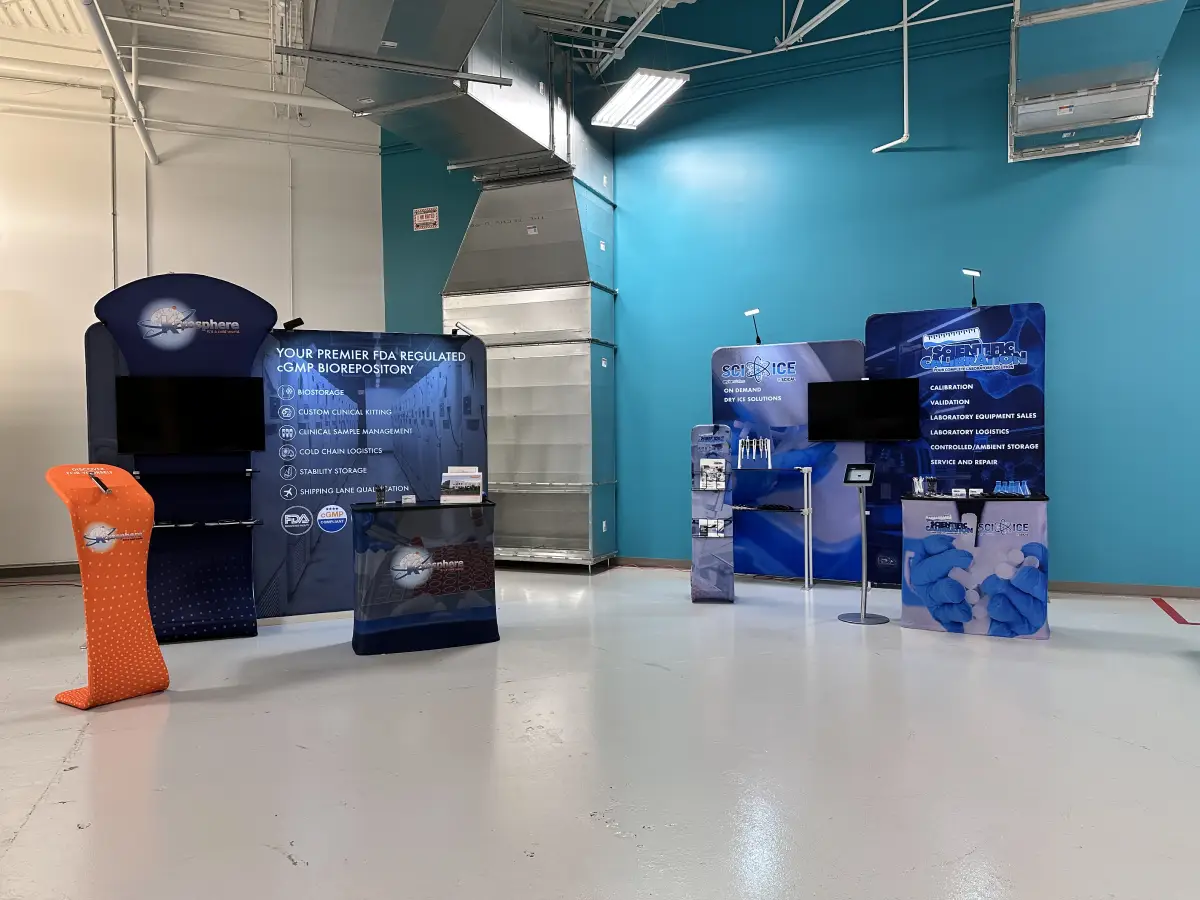
Turnkey work matters when the client wants one party handling purchase orders, vendor calls, service desks, COIs, labor requests, freight timing, nightly recaps, and all the annoying reconciliation work that appears between a design decision and a delivered show.
That makes this section about project control, paperwork discipline, and scope ownership. It should not sound like concept development.
Execution priorities
- Use one accountable operator for budget, scope, and vendor traffic.
- Keep service orders, labor calls, freight, rentals, and field reports connected.
- Reduce rework caused by disconnected approvals and paperwork gaps.
- Treat the service as management infrastructure, not creative direction.
What drives the schedule on turnkey trade show services
The schedule on turnkey trade show services is driven by approvals, paperwork deadlines, and the cadence the engagement is supposed to enforce on the rest of the program.
Once the responsibility map is real, the calendar becomes legible; until then, every milestone is one missed signature away from slipping into the next week.
Augusta venues we work
Augusta events cluster around a small number of venues, and each one has a different personality on the floor.
The right building depends on the show: a consumer expo wants open aisles and broad traffic flow; a corporate conference wants controlled breakout space; a brand activation wants a venue that can carry scenic and production without fighting the architecture.
Newberry Hall. Banquet seating for 220 to 250 and hors d'oeuvre reception capacity for 325.
Edgar's Above Broad: the main venue site places the property at 699 Broad Street and reinforces the mission-driven Edgar's Hospitality Group operating model.
Augusta Convention Center is one of the anchors. Vista Convention Services as the official service contractor and Encore for audiovisual, internet, phone, and rigging support at the Augusta Marriott and convention center complex.
How we're built to run your project
Trade Show Services of Augusta operates out of Augusta with a full in-house production shop. Custom fabrication, rental inventory, graphics production, and show-site labor live under one roof.
Local fabrication means real-time problem-solving. A graphic that needs to be reprinted at 6 a.m. On install day is a same-morning fix, not a three-day shipping delay.
Consistency across show dates is the other reason to hire local. The same crew that built the booth runs the install, knows the pack-out, and catches the small things — a missing hardware pack, a graphic edge that needs reseating, a storage crate routed to the wrong bay — without needing the client team to intervene.
Operational rules on the Augusta floor
Augusta floor operations follow the venue's own manual. Dock timing, utility orders, rigging, and crew calls all come out of that document.
The workable version of Augusta labor planning is boring on purpose: read the manual, match the scope to its categories, order what the venue sells directly, and schedule everything else around its posted windows. Surprises almost always trace back to a step someone skipped.
Crowne Plaza North Augusta: Crowne Plaza North Augusta markets its meeting space as hotel-managed with built-in lighting, technology, AV capability, and specialist planning support, which is closer to a managed hospitality model than to a generic open exhibit hall.
Practical planning rules for the services in Augusta: Use phrases such as 'venue-directed services', 'official exhibitor guide', 'service manual review', 'managed planning support', and 'show-contractor coordination aligned with current venue rules'. Treat Augusta as a CSRA market where downtown convention work, suburban exhibition halls, stadium hospitality, university facilities, and boutique hotels each behave differently.
The main Augusta event areas
The Downtown Augusta Riverfront Convention District area runs through Augusta, Downtown Augusta, Riverfront Augusta, Broad Street. This is the market's strongest convention and civic-events cluster, combining the convention center, downtown hotels, museums, theaters, rooftop venues, and the riverfront.
South Augusta and Regional Access Belt runs across South Augusta, Hephzibah, Blythe. This cluster matters for airport access, military and defense traffic, and south-side routing into the broader CSRA.
Scope on a turnkey trade show services project
A full engagement covers scope development, fabrication or rental, graphics, show services, logistics, and on-site execution from move-in through dismantle.
Typical line items include booth structure (custom or rental), graphics and print, AV and lighting, show-service orders (power, internet, rigging), labor calls against the venue's rules, freight both ways, on-site supervision, and post-show closeout documentation.
A well-run project has few surprises on install day because the handoffs upstream were tight. A bad one has many, because they weren't.
For programs that repeat, asset management becomes part of the engagement — storage, graphic rotation, refurbishment, and re-crating are planned rather than one-off.
Out of scope by default are show organizer fees, booth lease costs paid directly to the show, staff travel and per diems, and any custom software or data-capture tooling the client runs on its own stack. Those stay on the client side and plug into the project through coordination, not rebilling.
What an engagement actually looks like
First step on any project is pinning down the show, the floor plan, the deadlines, and what success actually looks like. Everything downstream hinges on those answers.
Once scope is clear, the venue work begins. Exhibitor manual, dock times, utility order IDs, rigging submissions for hanging elements, and labor calls all get locked against the venue's actual rules.
Production covers fabrication, graphics, AV spec, rentals, and crew chief assignment. It is the longest phase of most projects and the one where timelines are either protected or lost.
The install phase has one owner on the floor. That person handles the labor calls, the graphics questions, the sequence adjustments, and the daily update.
Show-hours coverage is part of every engagement — not a premium add-on. On-floor support keeps the booth running while the client team runs the pipeline.
Strike and closeout happen the same day. Storage labels, outbound manifests, vendor performance notes, and a written debrief go out within 24 hours of doors closing.
What it costs and how fast it moves
An honest quote itemizes the variables. There is not a single price — there is a configuration.
Six variables drive the cost: custom versus rental, booth footprint and complexity, venue-specific labor and rigging fees, graphics scope and substrate, freight distance and timing, and the number of on-site supervision days.
A clean schedule starts 4 to 5 months out for custom work and 2 to 3 months for rentals. Shorter lead times are workable but push rush premiums and limit material choices.
What success looks like on turnkey trade show services
This service is measured on whether the engagement stays organized: clean paperwork, tracked vendor commitments, resolved approvals, and a closeout that does not surprise the client.
The clearest signal is when the original scope still describes the engagement at the end; that is what separates a managed engagement from a billed one.
Turnkey Trade Show Services questions
Do you work at Augusta Convention Center?
Yes. The riverfront complex at 2 10th Street in downtown Augusta as the market's primary convention venue. Projects at that building are planned against its specific floor rules.
How does this service interact with on-site labor?
The services sits above the labor lane. The scope reads the venue's rules, sets the call counts, and keeps responsibility clear so the field crew is not improvising assignments on the floor.
What lead time does turnkey trade show services need?
This scope is most useful when it is in place at kickoff, not after the program is already ordered. Earlier alignment keeps the engagement organized instead of reconstructed in week six.
What information does this work need to start?
The show or event details, the existing scope, current vendor list, and where the gaps are. The responsibility map is the first decision the engagement has to lock.
Who runs the program on-site when the program is in scope?
The accountable operator under this scope, supported by the field crew and the venue's contacts. That structure is what makes the engagement hold in real time rather than fragment under pressure.
Does this service carry into the next city on the calendar?
It can. The scope is intentionally portable; the discipline travels even when the venue changes. Where it has to flex is around local rules, not around the engagement's spine.
What happens if a paperwork or vendor problem hits during show hours?
The accountable operator carries the issue end-to-end: identify, log, resolve, and document. That is the whole point of the services sitting as one accountable layer.