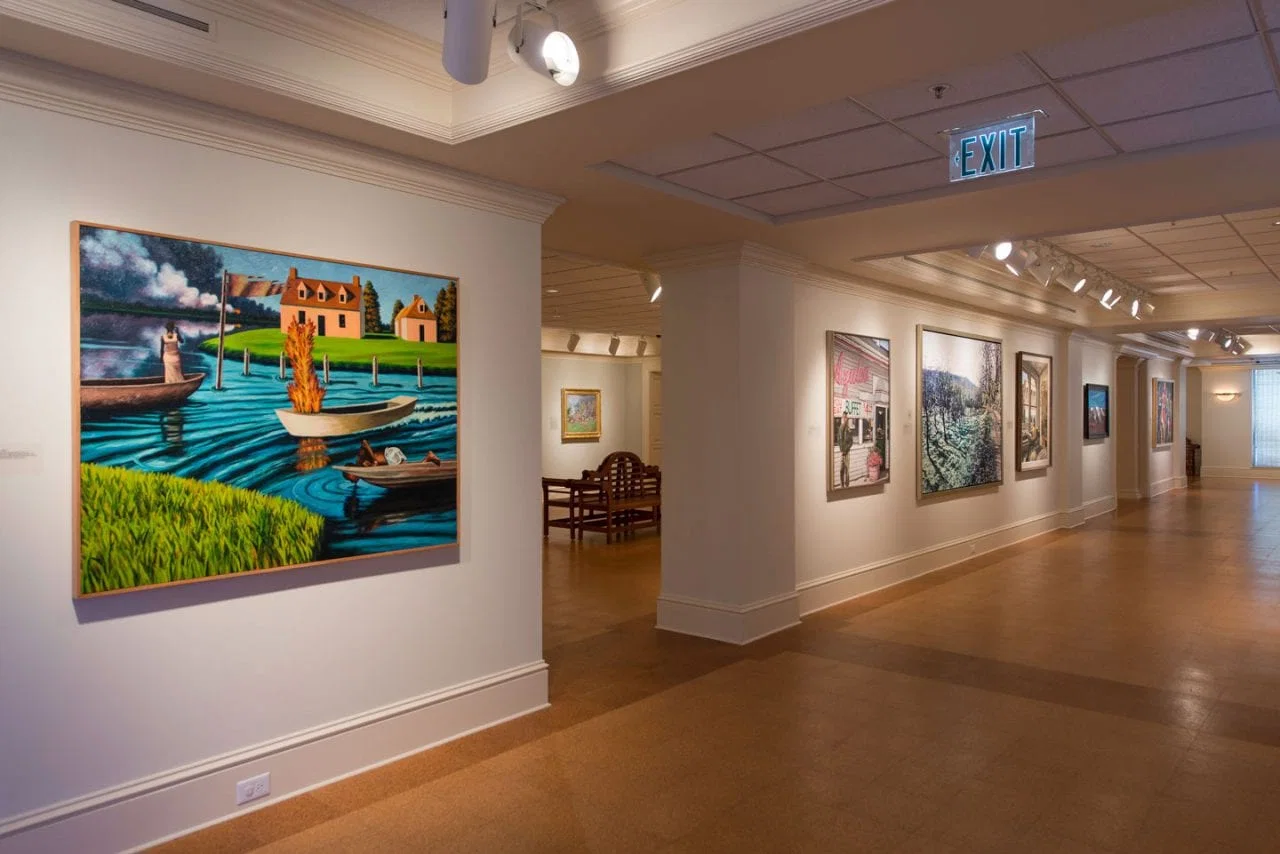
This property matters when the host wants Southern art and riverfront downtown setting to shape the experience. The museum's event materials point to galleries and lobby receptions for up to 100 people and to the SRP Auditorium for theater-style programs, seated lunches or dinners, or classroom and boardroom layouts that are much more intimate than the Augusta Museum of History Rotunda.
The section should stay on the art-forward side of the venue.
Verified venue facts
- The Morris's official event section says the galleries and museum lobby can host up to 100 people for a reception or cocktail-style event.
- The same section says the SRP Auditorium supports theater-style events for up to 110 people, seated lunches or dinners for 60, and classroom or boardroom setups for 40.
- The museum positions its Southern art collection and riverfront downtown setting as part of the event experience.
Execution priorities
- Use the galleries and lobby to create a browsing and conversation rhythm rather than a big dinner-room cadence.
- Treat the Southern art collection as part of the event experience, not background wallpaper.
- Use the SRP Auditorium when the program needs a smaller seated presentation with museum context.
- Keep hospitality, lighting, and furniture scaled to the art instead of fighting it.
Working at Morris Museum of Art
The galleries and museum lobby can host up to 100 people for a reception or cocktail-style event.
The SRP Auditorium supports theater-style events for up to 110 people, seated lunches or dinners for 60, and classroom or boardroom setups for 40.
Located at Downtown Augusta Riverwalk.
On any Morris Museum of Art project, the first step is pulling the current exhibitor manual and confirming the service-order deadlines, dock windows, and any rigging approval path. Design decisions come after those are locked.
How Morris Museum of Art fits the Augusta event picture
The art is a gallery-and-auditorium venue formed by Southern art, not by civic-history scale. That is what makes the art a specific kind of room inside the Augusta event picture rather than a generic offsite booking.
The program brief has to respect what the building already does well; the rest of the Augusta market behaves differently and is built for different work.
Augusta labor and venue services
Snelling Conference Center: Snelling's official conference materials package catering, venue policies, Wi-Fi, accessibility, and bandwidth requests through the property's sales team instead of advertising an outside-vendor-first model.
Use exhibitor-appointed-contractor coordination language for Augusta Convention Center and other formal expo environments. Use venue-managed hospitality language for hotels, museums, stadiums, rooftop venues, and golf-week hospitality properties.
Scope at Morris Museum of Art
Individual projects layer or remove items based on scope.
The handoffs on a project at the art matter almost as much as the line items. Design has to hand a build-ready drawing to fabrication. Every handoff is a place quality can drop.
Scope boundary is as important as scope inclusion.
The process from start to finish
Everything downstream hinges on those answers.
Venue coordination comes next.
With venue details locked, production runs.
The install phase has one owner on the floor.
During show hours, the booth is a live operating space.
What drives cost and timing at Morris Museum of Art
At the art, cost is driven by the building's own service stack, the load-in window, and how much crew time the venue's rules require. Each of those is a published constraint, not a negotiation.
Timing only stays achievable when the program locks dates against the venue's published holds, not against client wishful thinking.
Outcomes we optimize for
Exhibitors who measure programs seriously track leads, floor-booked meetings, and post-show pipeline. The build and the install are upstream inputs to those KPIs.
Client teams sometimes want the booth to carry the pipeline on its own, but the best-performing programs treat the booth as a platform and put real operators on it. On-floor conversation discipline moves the KPIs more than any scenic decision.
Working Morris Museum of Art the right way
The art is a gallery-and-auditorium venue formed by Southern art, not by civic-history scale. The team that earns repeat work at this property is the one that respects what the building already wants to do.
That is the bar a vendor has to clear: the room's published rules become design inputs instead of show-week surprises, and the field plan absorbs the building's calendar from the start.
Morris Museum of Art questions
How does labor and crew time work at Morris Museum of Art?
At the art, crew is sized to the room, the load-in window, and whatever the venue's house team is already covering.
How far ahead should we book this work?
For the art, locking the date earlier protects the parts of the program that depend on the venue's behavior.
What information is needed to start a project at the program?
From there, the buildout plan can match what the art actually offers.
Who runs the room on-site at this service?
One named field lead carries the schedule, the punch list, and the venue contact at the art.
Can a build at the plan pack out and travel to the next city?
Most of the time, yes. The harder question is whether the next venue can absorb what the art let the program do.
What happens if something breaks during show hours at this work?
The on-site lead handles it. Minor fixes happen in place; anything bigger gets routed through the building's service desk or a local shop, with the art's house team in the loop.