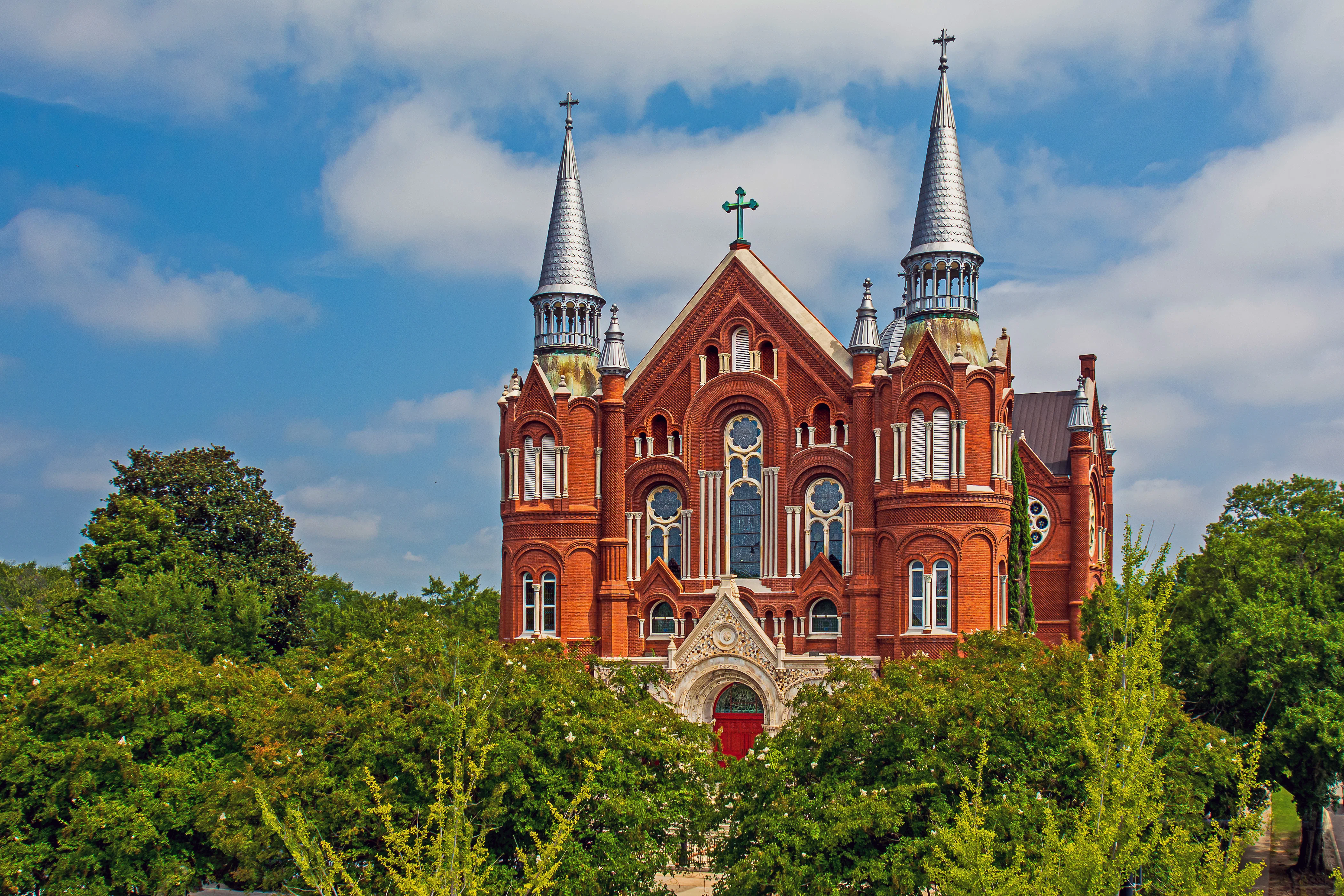
This venue works when the building itself has to do part of the emotional work. Sacred Heart is valuable because the architecture arrives with meaning: historic restoration, stained glass, ceremonial scale, and a stronger sense of occasion than a hotel ballroom or corporate meeting room can provide.
That makes the section about landmark atmosphere, courtyard support, and memorable hosted events. It should not sound like a divisible-ballroom hotel package.
Verified venue facts
- The current Sacred Heart rental agreement describes the restored 1898 landmark as a nonprofit cultural center with Romanesque Byzantine architecture, imported stained glass, carved Italian marble, and event support spaces.
- The same packet says rentals include the courtyard, catering kitchen, and event-day support details, reinforcing that the site actively hosts private functions.
- The packet positions the venue as an intentionally restored historic setting rather than a blank modern ballroom.
Execution priorities
- Use the venue when architecture and occasion matter as much as logistics.
- Plan around landmark character, donor tone, and a more ceremonial guest experience.
- Treat the courtyard and catering support as event tools, not side notes.
- Build a cultural-venue brief, not a room-block hotel brief.
What drives the schedule at Sacred Heart Cultural Center
At Sacred Heart Cultural Center, the calendar is governed by the building's published holds, the show or event window, and the surrounding date pressure that the venue is already absorbing.
The way to plan around that is to shape the program against the venue's reality rather than asking the venue to bend; the building's calendar is a constraint, not a negotiation.
Operational rules on the Augusta floor
Augusta floor operations follow the venue's own manual.
Practical planning rules for the center in Augusta: Use exhibitor-appointed-contractor coordination language for Augusta Convention Center and other formal expo environments. Use venue-managed hospitality language for hotels, museums, stadiums, rooftop venues, and golf-week hospitality properties.
What's included in the project scope
For programs that repeat, asset management becomes part of the engagement — storage, graphic rotation, refurbishment, and re-crating are planned rather than one-off.
Scope boundary is as important as scope inclusion.
What an engagement actually looks like
After the brief, the work turns to the building itself.
Install days are owned by a single on-site lead.
Throughout show hours, the on-site lead stays present.
Strike and closeout happen the same day.
What it costs and how fast it moves
Every project has the same cost drivers.
Lead time drives everything. Custom: 16 to 20 weeks. Rental: 8 to 12.
What a clean job at Sacred Heart Cultural Center looks like
At the center, the work is measured by how the building behaves during the run. Doors open on time, the room reads the way the floor plan promised, and the venue team is willing to take a call from the same operator next year.
That repeats when the venue stops being a blind spot and becomes part of the operating plan, which is the whole reason to invest in working a property well rather than treating it as interchangeable.
How we're built to run your project
Trade Show Services of Augusta keeps the work local.
Consistency across show dates is the other reason to hire local. The same crew that built the booth runs the install, knows the pack-out, and catches the small things — a missing hardware pack, a graphic edge that needs reseating, a storage crate routed to the wrong bay — without needing the client team to intervene.
About Sacred Heart Cultural Center
The current Sacred Heart rental agreement describes the restored 1898 landmark as a nonprofit cultural center with Romanesque Byzantine architecture, imported stained glass, carved Italian marble, and event support spaces.
The venue as an intentionally restored historic setting rather than a blank modern ballroom.
Located at Downtown Augusta Historic Core.
Running a project here means working against the venue's own exhibitor manual, dock windows, and service-order deadlines. Those details are confirmed before any build commits to fabrication.
Sacred Heart Cultural Center questions
How does labor and crew time work at Sacred Heart Cultural Center?
It runs against the building's published rules and the show's exhibitor manual. At the center, crew is sized to the room, the load-in window, and whatever the venue's house team is already covering.
How far ahead should we book this work?
The further out the better, because the building's calendar fills against its own holds. For the center, locking the date earlier protects the parts of the program that depend on the venue's behavior.
What information is needed to start a project at the program?
Confirmed dates, the program brief, expected headcount, and the parts of the room being used. From there, the buildout plan can match what the center actually offers.
Who runs the room on-site at this service?
One named field lead carries the schedule, the punch list, and the venue contact at the center. That role is the single source of truth from install through strike.
Can a build at the plan pack out and travel to the next city?
Most of the time, yes.
What happens if something breaks during show hours at this work?
The on-site lead handles it.